
The 15 best leadership books, ranked by reader data

The leadership books that managers, founders and team leads actually buy, read and recommend, ranked by reader data. Updated October 2026.

Cover of Start with Why by Simon Sinek
Cover of Extreme Ownership by Jocko Willink
Cover of The Five Dysfunctions of a Team by Patrick Lencioni

At a glance

  1. 1
    Cover of Extreme Ownership by Jocko Willink
    Extreme Ownership by Jocko Willink
  2. 2
    Cover of Start with Why by Simon Sinek
    Start with Why by Simon Sinek
  3. 3
    Cover of The Five Dysfunctions of a Team by Patrick Lencioni
    The Five Dysfunctions of a Team by Patrick Lencioni
  4. 4
    Cover of Leaders Eat Last by Simon Sinek
    Leaders Eat Last by Simon Sinek
  5. 5
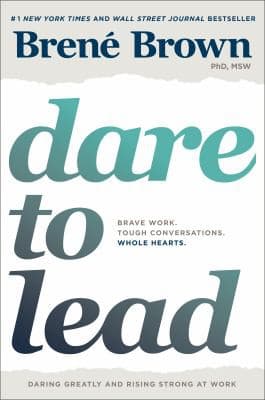
    Cover of Dare to Lead by Brené Brown
    Dare to Lead by Brené Brown
  6. 6
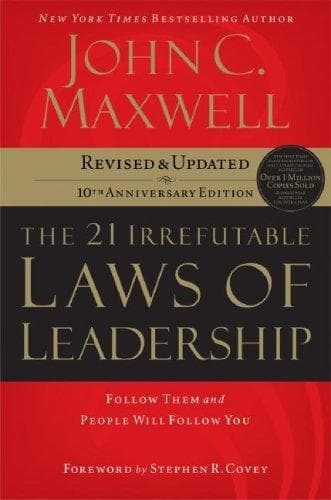
    Cover of The 21 Irrefutable Laws of Leadership by John C. Maxwell
    The 21 Irrefutable Laws of Leadership by John C. Maxwell
  7. 7
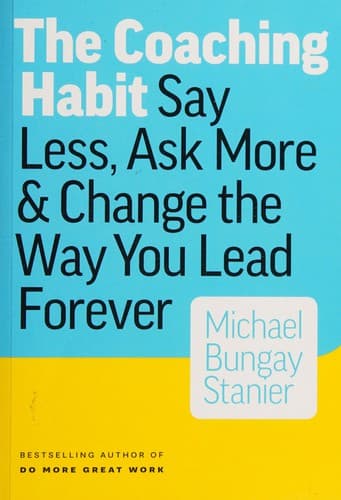
    Cover of The Coaching Habit by Michael Bungay Stanier
    The Coaching Habit by Michael Bungay Stanier
  8. 8
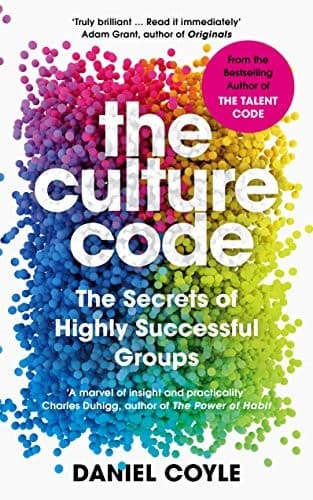
    Cover of The Culture Code by Daniel Coyle
    The Culture Code by Daniel Coyle
  9. 9
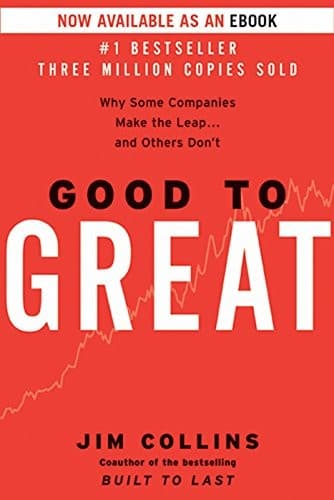
    Cover of Good to Great by Jim Collins
    Good to Great by Jim Collins
  10. 10
    Cover of The Infinite Game by Simon Sinek
    The Infinite Game by Simon Sinek
  11. 11
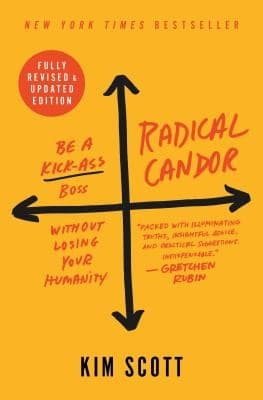
    Cover of Radical Candor by Kim Scott
    Radical Candor by Kim Scott
  12. 12
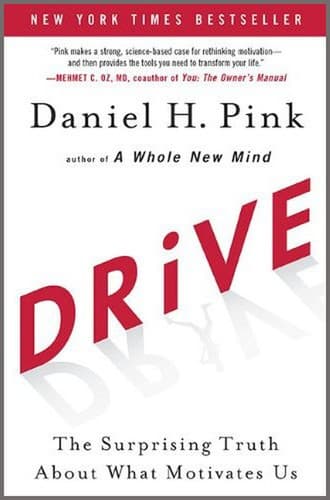
    Cover of Drive by Daniel H. Pink
    Drive by Daniel H. Pink
  13. 13
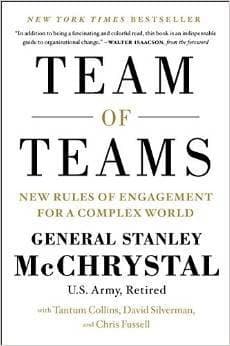
    Cover of Team of Teams by Stanley McChrystal
    Team of Teams by Stanley McChrystal
  14. 14
    Cover of Turn the Ship Around! by L. David Marquet
    Turn the Ship Around! by L. David Marquet
  15. 15
    Cover of Multipliers by Liz Wiseman
    Multipliers by Liz Wiseman
Cover of Start with Why by Simon Sinek

#2

Start with Why

Simon Sinek · 2009

4.6 on Amazon28k reviews9.9k searches a monthAbout 5 hours to read

Argues that organizations and leaders inspire loyalty by communicating their purpose before their products or methods.

Sinek contends that the most influential leaders and companies begin with their purpose, the reason they exist beyond making money, and only then explain how and what they do. He presents this as the Golden Circle and ties it to inspiration, trust, and customer and employee loyalty. Using examples such as Apple, Southwest Airlines, and Martin Luther King Jr., he shows readers how to define a clear purpose and apply it to hiring, culture, and messaging.

Key ideas

  • The Golden Circle orders communication as why, then how, then what.
  • People commit to a purpose they share, not just to products.
  • Clear purpose guides hiring, culture, marketing, and long-term decisions.

Best for

Founders, managers, and marketers seeking a clearer mission and more compelling way to communicate it.

View on Amazon
Cover of The Five Dysfunctions of a Team by Patrick Lencioni

#3

The Five Dysfunctions of a Team

Patrick Lencioni · 2005

4.6 on Amazon15k reviews8.1k searches a monthAbout 3 hours to read

A practical guide to diagnosing and fixing the five problems that keep teams from working well together.

Lencioni argues that teams fail because of a connected chain of problems: absence of trust, fear of conflict, lack of commitment, avoidance of accountability, and inattention to results. This guide, a companion to his leadership fable, turns that model into practice with assessments, exercises, and examples. Readers learn to judge whether they are truly a team, measure current health, and decide whether they will commit the effort needed to improve.

Key ideas

  • Team dysfunctions build on one another, with missing trust as the foundation.
  • Healthy, passionate debate is necessary for real commitment and better decisions.
  • Peers holding each other accountable works better than relying on managers alone.

Best for

Team leaders, managers, and consultants who want hands-on tools for building stronger teams.

View on Amazon
Cover of Leaders Eat Last by Simon Sinek

#4

Leaders Eat Last

Simon Sinek · 1900

4.6 on Amazon14k reviews9.9k searches a monthAbout 7 hours to read

Sinek argues great leaders protect their people, creating trust and cooperation through a Circle of Safety.

Drawing on biology, military culture, and company examples, Sinek argues that people thrive when they feel safe and valued within their group. Leaders who put the wellbeing of their team ahead of their own comfort create trust, loyalty, and cooperation. Without that protection, workplaces fill with politics, silos, and self-interest. Readers take away a view of leadership as responsibility for others, plus ideas for building healthier, more resilient teams and cultures.

Key ideas

  • Leaders must sacrifice comfort and self-interest to look after the people in their care.
  • A Circle of Safety lets teams trust each other and focus on outside challenges.
  • Human biology favors cooperation when we feel safe, so workplace culture shapes behavior.

Best for

Managers and executives wanting to build trust, loyalty, and healthier team culture.

View on Amazon
Cover of Dare to Lead by Brené Brown

#5

Dare to Lead

Brené Brown · 2018

4.7 on Amazon23k reviews1.3k searches a monthAbout 6 hours to read

A practical case for courageous, vulnerable leadership built on empathy, trust, and honest conversation.

Brown argues that leadership is a matter of taking responsibility for people and ideas, not holding a title. Drawing on her research on vulnerability, shame, and courage, she shows how leaders can build cultures where people speak candidly and take risks. She treats courage as a set of teachable skills, including curiosity, clear communication, and living by your values. Readers come away with concrete practices for handling hard conversations and building trust on their teams.

Key ideas

  • Leadership comes from caring about people and potential, not from rank or status.
  • Vulnerability is the foundation of courage, trust, and honest work, not a weakness.
  • Clear values and skill-building help leaders stay brave under pressure and uncertainty.

Best for

Managers and team leaders wanting to build trust and handle difficult conversations well.

View on Amazon
Cover of The 21 Irrefutable Laws of Leadership by John C. Maxwell

#6

The 21 Irrefutable Laws of Leadership

John C. Maxwell · 1998

4.7 on Amazon9.1k reviews8.1k searches a monthAbout 5 hours to read

A collection of twenty-one leadership principles built around the idea that leadership can be learned.

Maxwell argues that leadership is not a mysterious gift but a set of principles anyone can study and practice. Each chapter covers one law, such as influence, process, trust, and legacy, and illustrates it with short anecdotes and examples. The takeaway is that leadership grows through daily habits, and that a leader's effectiveness is capped by their own character and ability to inspire followers. Readers get a practical checklist for self-assessment and development.

Key ideas

  • Leadership is fundamentally about influence, not job titles or positions.
  • Leadership develops gradually through daily practice rather than arriving all at once.
  • A leader's effectiveness is limited by their own level of leadership ability.

Best for

New managers and aspiring leaders wanting an accessible, principle-by-principle introduction to leadership.

View on Amazon
Cover of The Coaching Habit by Michael Bungay Stanier

#7

The Coaching Habit

Michael Bungay Stanier · 1905

4.5 on Amazon17k reviews3.6k searches a monthAbout 12 hours to read

A practical guide to building a coaching habit by asking better questions instead of giving advice.

Bungay Stanier argues that managers and leaders default to advice-giving and rescuing, which creates overwhelmed leaders and dependent teams. He proposes a simple alternative: stay curious a little longer and respond with a small set of well-chosen questions in everyday conversations. The book offers seven core questions and shows how to turn brief, routine exchanges into coaching moments. Readers come away with easy-to-use tools for building the habit, without formal coaching training.

Key ideas

  • Stay curious longer and rush to give advice less often.
  • A handful of simple questions can guide most work conversations.
  • Lasting behavior change comes from small, deliberate habits, not big training programs.

Best for

Managers and team leaders who want to delegate better and develop their people.

View on Amazon
Cover of The Culture Code by Daniel Coyle

#8

The Culture Code

Daniel Coyle · 2018

4.7 on Amazon8.7k reviews2.9k searches a monthAbout 5 hours to read

Explores how top groups build strong cultures through safety, vulnerability, and shared purpose, with practical steps for leaders.

Coyle argues that great culture is not a trait a group inherits but a set of behaviors it practices. Drawing on organizations like Pixar, the San Antonio Spurs, and Navy SEAL Team Six, he identifies three skills: building safety, sharing vulnerability, and establishing purpose. Readers come away with concrete tactics for creating trust, encouraging cooperation, and repairing weak or toxic team environments, supported by stories and social science research.

Key ideas

  • Psychological safety, signaled through belonging cues, is the foundation of cohesive, high-performing groups.
  • Leaders who openly admit weakness invite others to take risks and collaborate.
  • Shared purpose grows from clear stories, shared goals, and consistent reinforcing behaviors.

Best for

Managers, team leaders, coaches, and founders wanting to strengthen or repair their group's culture.

View on Amazon
Cover of Good to Great by Jim Collins

#9

Good to Great

Jim Collins · 2001

4.5 on Amazon9.9k reviews6.6k searches a monthAbout 6 hours to read

Research-based study of why some companies leap from solid performance to lasting greatness.

Collins and his team compared companies that achieved sustained breakthrough results with similar firms that stayed merely good. He argues that greatness comes less from charisma, bold strategy or technology than from disciplined people, disciplined thinking and disciplined action. Readers come away with a practical vocabulary for leadership, hiring, focus and momentum. The ideas also carry over to nonprofits and other social sector organizations, where success can't be measured by profit alone.

Key ideas

  • Level 5 leaders combine personal humility with fierce professional resolve.
  • Get the right people on the bus before deciding where it goes.
  • Build a hedgehog concept and keep pushing the flywheel for steady momentum.

Best for

Managers and executives seeking evidence-based principles for building disciplined, enduring organizations.

View on Amazon
Cover of The Infinite Game by Simon Sinek

#10

The Infinite Game

Simon Sinek · 2019

4.7 on Amazon8.1k reviews1.9k searches a monthAbout 6 hours to read

Argues that leaders should treat business as an ongoing game with no winners, focused on lasting.

Sinek contrasts finite games, with fixed rules and clear winners, against infinite games, where the aim is to keep playing. He argues that many companies lose ground by chasing short-term wins and rivalry instead of long-term resilience. Drawing on business and historical examples, he urges leaders to adopt an infinite mindset built around purpose and trust. Readers come away with a lens for judging strategy, culture, and competition over the long run.

Key ideas

  • Business is an infinite game, so beating rivals is the wrong goal.
  • A just cause gives an organization purpose that outlasts any quarter.
  • Trusting teams and psychological safety support long-term resilience.

Best for

Managers and executives rethinking strategy, culture, and purpose beyond quarterly targets and competitor comparisons.

View on Amazon
Cover of Radical Candor by Kim Scott

#11

Radical Candor

Kim Scott · 2017

4.5 on Amazon10k reviews2.9k searches a monthAbout 6 hours to read

A management guide arguing great bosses combine personal care with direct challenge in everyday feedback.

Kim Scott argues that good leadership rests on two habits practiced together: caring about people as individuals and being willing to tell them hard truths. Using a simple two-axis framework, she shows how bosses fail when they lean too far toward either niceness or bluntness. Readers come away with a practical way to give and invite praise and criticism, build trust with their teams, and keep a focus on results without losing their humanity.

Key ideas

  • Care Personally and Challenge Directly must work together, not trade off.
  • Avoiding hard conversations out of kindness often harms people more than honesty does.
  • Leaders should invite criticism of themselves first to build a real feedback culture.

Best for

New and experienced managers who want better feedback habits and stronger team relationships.

View on Amazon
Cover of Drive by Daniel H. Pink

#12

Drive

Daniel H. Pink · 2009

4.5 on Amazon9.4k reviews1.9k searches a monthAbout 5 hours to read

Argues that autonomy, mastery, and purpose motivate people better than rewards and punishments.

Pink contends that carrot-and-stick incentives work for simple, routine tasks but often undermine creativity and complex thinking. Drawing on decades of behavioral science, he describes a more effective approach built on self-direction, the urge to improve, and a sense of meaning. He points to organizations that have changed how they manage people and offers practical suggestions for applying these ideas at work, at school, and in personal life.

Key ideas

  • Extrinsic rewards can reduce interest and creativity on complex, open-ended work.
  • Autonomy, mastery, and purpose form the core of lasting intrinsic motivation.
  • Managers should give people freedom over tasks, time, team, and technique.

Best for

Managers, teachers, and team leaders rethinking incentives and how to engage people.

View on Amazon
Cover of Team of Teams by Stanley McChrystal

#13

Team of Teams

Stanley McChrystal · 2015

4.6 on Amazon5.2k reviews2.4k searches a monthAbout 6 hours to read

How JSOC abandoned rigid hierarchy to fight Al Qaeda, and what any organization can borrow.

McChrystal argues that traditional top-down management, built for predictable conditions, fails in a fast, interconnected world. Facing a networked enemy in Iraq, his command rebuilt itself around small empowered teams linked by constant information sharing and trust. The book blends war stories with research from other fields to show how leaders can trade efficiency for adaptability. Readers come away with a practical case for shared awareness, decentralized decisions, and leaders who tend the system rather than direct it.

Key ideas

  • Complex environments defeat efficiency-focused hierarchies that work well in merely complicated ones.
  • Trust and common purpose let separate teams act like one connected network.
  • Shared awareness plus delegated authority lets decisions happen close to the problem.

Best for

Managers and executives restructuring large organizations for speed, uncertainty, and cross-team collaboration.

View on Amazon
Cover of Turn the Ship Around! by L. David Marquet

#14

Turn the Ship Around!

L. David Marquet · 2001

4.6 on Amazon8.3k reviews720 searches a monthAbout 5 hours to read

A former submarine captain explains how he turned a struggling crew into leaders by sharing control.

Marquet recounts taking command of the USS Santa Fe, a poorly performing nuclear submarine, and rejecting the traditional model in which leaders give orders and crews obey. He instead pushed decisions down to the people with the best information. The book argues that this improves morale, performance, and retention. Readers get a practical approach for building ownership, competence, and clarity on their own teams, with lessons that apply well beyond the military.

Key ideas

  • Replace the leader-follower model with one where everyone acts as a leader.
  • Move decision authority to the people closest to the information.
  • Build technical competence and organizational clarity so that delegated control works.

Best for

Managers and team leaders wanting to replace top-down command with employee initiative and ownership.

View on Amazon
Cover of Multipliers by Liz Wiseman

#15

Multipliers

Liz Wiseman · 2010

4.7 on Amazon3k reviews2.4k searches a monthAbout 6 hours to read

Contrasts leaders who amplify their teams' intelligence with those who drain it, and how to become the former.

Wiseman argues that leaders fall along a spectrum. Diminishers hoard authority and shrink the contributions of others, while Multipliers draw out and extend the abilities already in their people. Based on her research with executives, she describes the habits that set Multipliers apart and offers practical ways to adopt them. Readers come away with a way to spot their own diminishing tendencies and methods for getting better results from existing talent.

Key ideas

  • Multipliers get far more from people by tapping capability others leave unused.
  • Well-meaning leaders can be accidental diminishers through habits like micromanaging or always having the answer.
  • Five disciplines define Multipliers: attracting talent, liberating, challenging, debating, and investing in others.

Best for

Managers and executives who want better results from their teams without simply demanding more.

View on Amazon

How we rank these books

We start from 18 books that practitioners widely recommend on the topic, then rank them by what readers actually do rather than by our taste:

  • Review volume (55%): the number of Amazon US ratings on the book's main listing.
  • Rating (20%): the average Amazon US star rating.
  • Search demand (25%): how many people search Google in the US for the book each month.

Volume and demand are log-scaled so a few mega-sellers don't drown out everything else. Publication year and page counts come from Open Library. Summaries are our own, written from each book's catalog description. We don't take payment for placement.

From reader to author

Every book on this list started as one expert's know-how. Yours could be next.

BOOKED shows how experts turn what they know into a book that brings in clients. Rather not write it yourself? We can write it with you.

Questions about leadership books

Answers drawn from the data behind this list.

Browse all book lists
By reader data, Extreme Ownership by Jocko Willink ranks first, with 40k Amazon reviews and a 4.7 star rating. Start with Why and The Five Dysfunctions of a Team follow. Two former SEAL officers turn Iraq War combat lessons into leadership principles for business and life.

More business book lists